
Storm Boelo and why energy resilience starts at home
Storm Boelo has provided another powerful reminder of just how quickly severe weather can disrupt everyday life. Coming straight after Storm Austen, the storm brought winds exceeding 80mph, which in some areas caused flooding, major travel disruption and widespread power cuts across Britain. The Guardian reported that more than 838,000 properties were affected by power cuts, with around 90,000 customers still without electricity by Sunday evening.
Resilience is becoming part of the national conversation
Just days before Storm Boelo, the Government launched a new three year household preparedness campaign which encouraged people to take some simple steps in case of disruption to everyday services. The guidance specifically refers to severe weather affecting electricity, water, phones and internet services.
The advice includes practical measures such as keeping torches, batteries and mobile power packs available. The Met Office made the same point during Storm Boelo, warning that power cuts could occur and encouraging households to prepare for them in advance.
The Government does not recommend any particular home heating system as part of this advice, but we feel strongly that the underlying principle is important here. Resilience comes from being prepared and having alternatives available when the systems we normally depend upon are temporarily unavailable for whatever reason.
Heating deserves the same consideration
Most modern heating systems depend on electricity to some degree. Heat pumps obviously require it, but gas and oil central heating systems usually need electrical power for pumps, controls and ignition as well.
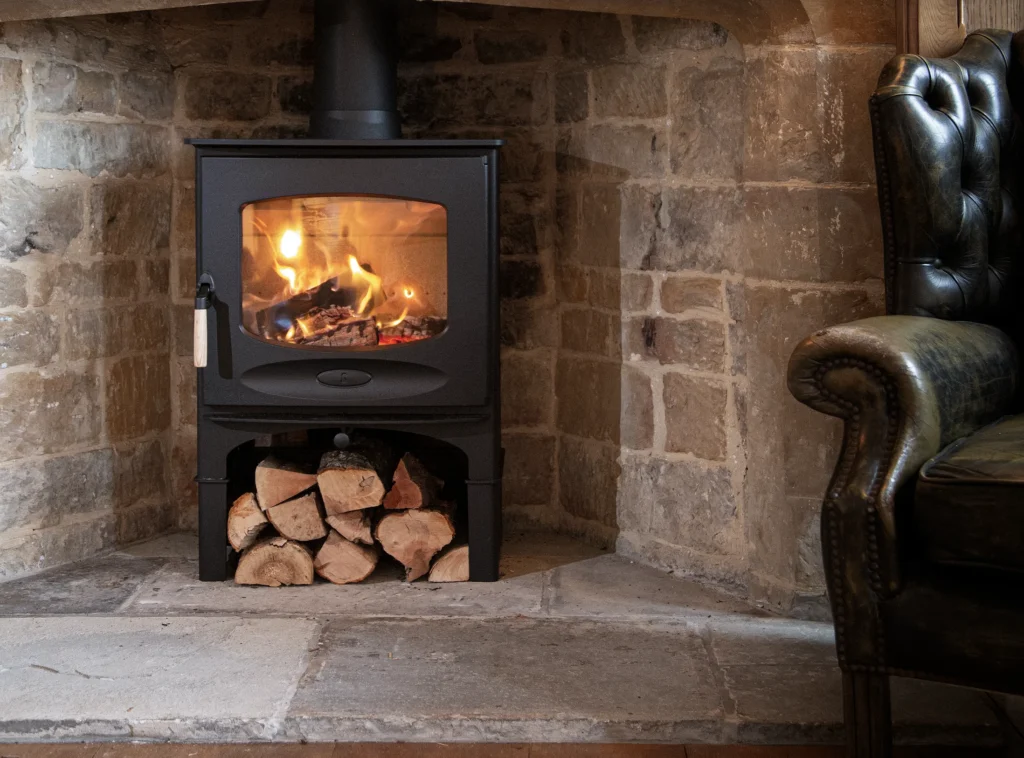
A modern wood burning stove offers something different because it can continue providing direct heat without relying on the electricity grid. During a prolonged power cut, that can allow a household to keep a central living space warm even when its main heating system is unavailable. In addition it can also be used to cook and warm food.
This is not an argument against other heating systems. Infact, we have previously written about household resilience and how the strongest homes combine different technologies rather than just relying upon one source of energy entirely. A modern woodburing stove therefore makes sense as an added layer of resilience, offering a completely independent source of warmth that becomes extremely valuable when severe weather interrupts the grid.
Modern wood burning has changed
Whilst resilience is hugely important it does not reduce the need to improve air quality. The good news is modern stoves are very different from open fires and older appliances, with Ecodesign requirements driving significant improvements in efficiency and emissions.
How they are used remains equally important, with burning properly seasoned or certified Ready to Burn wood a key part of that. Correct stove operation and keeping it and the chimney properly maintained all help ensure that fuel is burned more fully and turned into useful heat in the most efficient way possible.
At Charnwood, we have continued to develop and have focused on making stoves and combustion easier to control. Our intelligent stove technology automatically manages airflow throughout the burn, helping maintain efficient combustion while reducing the amount of intervention required from the user. We believe the goal should be to continue improving technology and encourage better burning, while recognising the unique role that wood burning stoves as an off grid source of heat can provide.
Preparing for an uncertain winter
Storm Boelo followed Storm Austen within a matter of days, while the Government has simultaneously begun encouraging households to think more seriously about how prepared they are. Nobody knows exactly what this coming winter will bring, but recent events do show why resilience should not be treated as just an abstract idea.
For homes that have a modern wood burning stove, there is an additional reassurance. When the electricity goes off and other heating systems stop, the wood burning stove can continue keeping the home and your family warm.
Read More: Wood-burning Stove Cooking: Everything you need know