
Symbiosis by Dammy Ponnuthurai
“Unless a grain of wheat falls into the earth and dies, it remains alone; but if it dies, it bears much fruit. ”John 12:24
As late October arrives, it’s almost a surprise. We know it’s autumn, but the air is still holding on to a borrowed warmth. For weeks the common conversation: Have you lit the fire yet? Given in and put the heating on? The answers vary but there is still a resounding “not yet” from most, as if delaying might hold the season at bay.
Then, without notice, something changes. One morning the wind has a different edge to it, an unmistakable chill that moves through straight to the core of your soul. The layers come out from the back of the recesses of our cupboards. Walking through the door feels like crossing a threshold of the unexpected.
This time of year feels a little like a small, expected death. We’ve been here before; we know exactly how this goes, and still it takes us by surprise. Forecasts try to give order and predictability to our days, but the lived weather of the microclimate creates unexpected anomalies that ignore the super computer of the meteorologist. In one autumn day you can pass through several seasons: bright beams of light, low sun, followed by a foreboding grey sky and sudden shower all in the course of one hour.
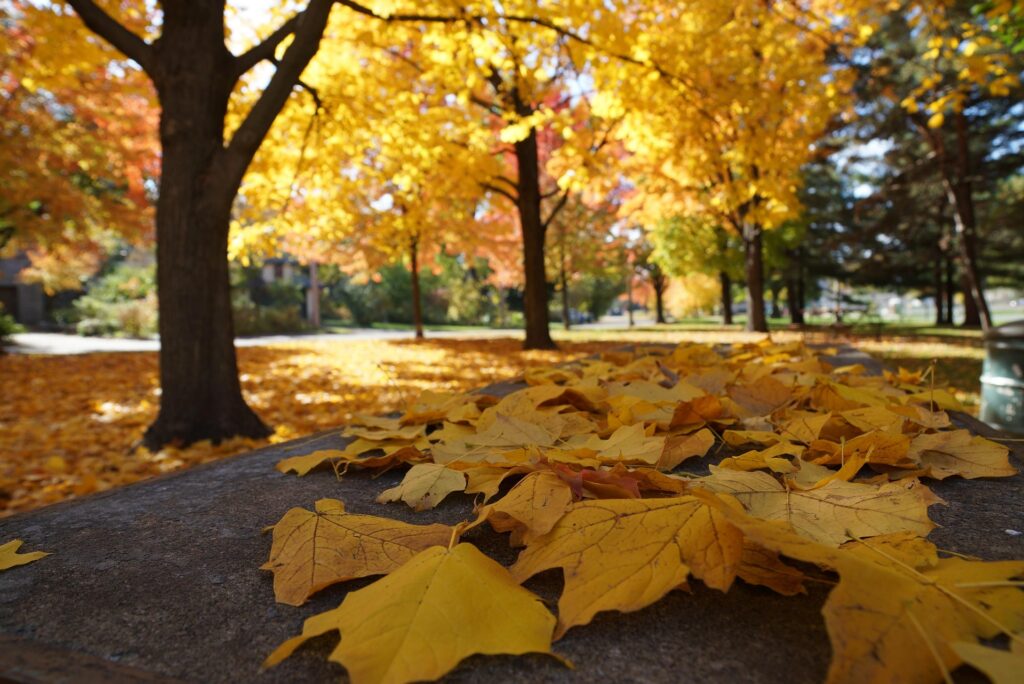
In the park recently, I stopped to look at a tree whose branches were still heavy with burnt red and orange leaves. A gust of wind moved through its leaves creating a cinematic moment as, slowly, the leaves began to fall. As they fell, the tree’s skeletal frame became more apparent, one end beginning a new cycle. Standing there, I found myself thinking of it as a kind of instruction in acceptance from the natural world.
We know that warmth and early light will come again, but for now the world has changed. We are in the set that is Autumn. The ground starts to sound different: that dry, crunch of leaves and fallen branches underfoot turn to soggy damp leaves that cling to shoes. In the corners of parks, piles of leaves gather where the wind or gardener has swept them. Young children throw themselves at these piles of leaves, part of agame that does not tire. Their joy is entirely of the moment; they are not yet troubled by the adult preoccupation of what comes next: the short days, the heavy skies and an obsession with keeping warm.
For some of us, that knowledge arrives early. The first dark afternoon can cast a long shadow over our ability to welcome this time of year. We start counting lost hours of light, feeling at times that maybe the world is closing in. There is an art to finding joy when we know more than we did as children, and it doesn’t always come easily.
One way is simply to pay closer attention, to notice how the same day can move from dark rain clouds to the pink hazy light before night falls or day breaks in the space of an hour. To watch rain approach and then pass, leaving everything briefly sharpened. To think of ourselves as part of these changes rather than separate from them, not an observer of weather, but a part of and being in the same pattern, helps us let go of something.
Like the animals around us, we begin to draw in as the days get shorter. We spend more time inside our homes and look forward to the moment of lighting the kindling and wait for that first, tentative flame to take. The moment the stove catches the quick roar, the first warmth of heat lights our faces and a smile, as the evening beckons us.
Perhaps that is the quiet work of these months, to practise a kind of acceptance of change to let the leaves fall, to plant bulbs for Spring. If we can do that, the walk towards winter need not feel like a loss. It can also be the beginning of what we are yet to imagine.