
Time for Everything – Autumn Sounds by Dammy Ponnuthurai
“There is a time for everything, and a season for every activity under the heavens.” — Ecclesiastes 3:1
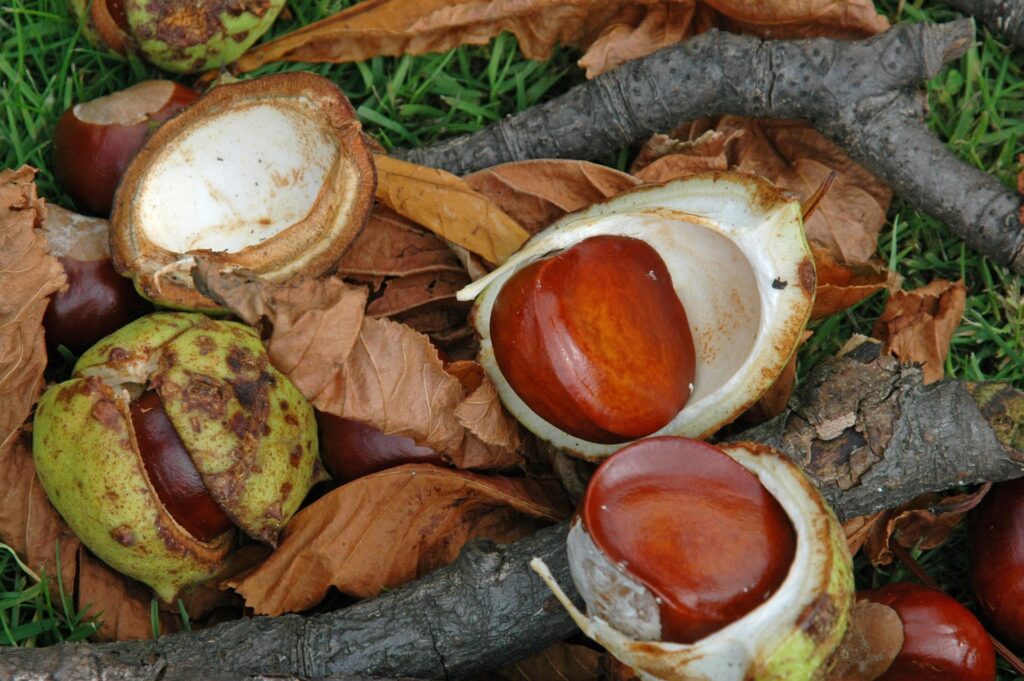
September has a way of slipping its clasp. We hold onto the last warmth and sounds of summer while the mornings arrive quietly, the light narrowed to a cooler veil. Leaves turn. Conkers and fallen hazelnuts scatter across pavements and parks. The conker, glossy as rich toffee in a child’s palm, has long signalled change, and I still think of the old game, first recorded on the Isle of Wight, as a small ritual that stitched the natural world into our days. It’s comforting to remember that much of what steadies us begins outside: under trees, along towpaths, in the ordinary drift of weather.
What we choose to call a thing matters. Before ‘autumn’ (and across the Atlantic, ‘fall’), the season was ‘harvest’, and that word tips the mood. Harvest is not decay but gathering, of produce, certainly, but also of attention. The days narrow, our focus follows. We draw in from summer’s sprawl to a closer, steadier circle. Even familiar habits feel new again: jumpers pulled from drawers, a first stew on the hob, windows opened just a crack to let in blue air with its sharper edge. And then there is the fire with its particular permission to sit down, to pause, to listen.
A hearth rearranges a room. People drift towards it without being asked. Stories lengthen there and shoulders drop. I love the modest promise a well-made stove makes on a late October evening: that the light will be warmer here than outside, that a kettle will come to the boil, that you can place yourself within reach of a steady glow and feel gathered. This is a season for learning to pay attention in smaller, kinder moments.
Another kind of attention tugs at us continuously, the algorithmic, invisible, insistent, nudging us towards constant response. It’s a poor tutor for autumn. When I feel that drag towards unchosen urgency, I try to step sideways into the slower lessons of the season. There are Japanese words that help me name what I’m after: komorebi, sunlight filtering through leaves; momijigari, the deliberate practice of going to admire autumn colour. Both invite us to look with intention, to be present to the day we have rather than the one being queued for us. A stove’s light belongs to the same language: an instrument for attention as much as for heat. Charnwood, whose stoves are made on the Isle of Wight, sit in my mind this season for that reason. Their stoves are part of the making of a home, a quiet presence for everyday evenings.
Outside, the light keeps up its lessons. Some days in the UK offer a broad, improbable blue into October; others bring rain that reorganises our plans in a paragraph. This unpredictability of light, weather and temperature isn’t a failure but an education. It trains a certain adaptiveness, almost childlike, asking us to meet the day we’re given. The stove’s steady heart helps us practise that. We can come back to warmth and begin again.
When decisions feel muddled — the kind that proliferate in a life distracted by notifications, I try something very small, that is to sit by the fire, say less, listen. Listening without pictures does something rare; it gives the imagination time to be heard. The room feels more like a room, the people more themselves. The woodburning stove is the tool that provides us the opportunity to return to our own nature.
I keep returning to that first conker on the pavement, the way it marks the season’s transformation. Once, children tied them to strings and kept score. Now I think of a different tally: minutes gathered rather than scattered, suppers eaten in company, pages read by a pool of warm light. We may call it autumn, but the older word abides. Harvest what is near: the afternoon’s thin sun through leaves, good wood set aside and dried, the evening’s small circle of attention. Make a clean, modest fire and let it teach you its pace.