
The Shape of Winter By Dammy Ponnuthurai
“To everything there is a season, and a time for every purpose under heaven.” Ecclesiastes 3:1
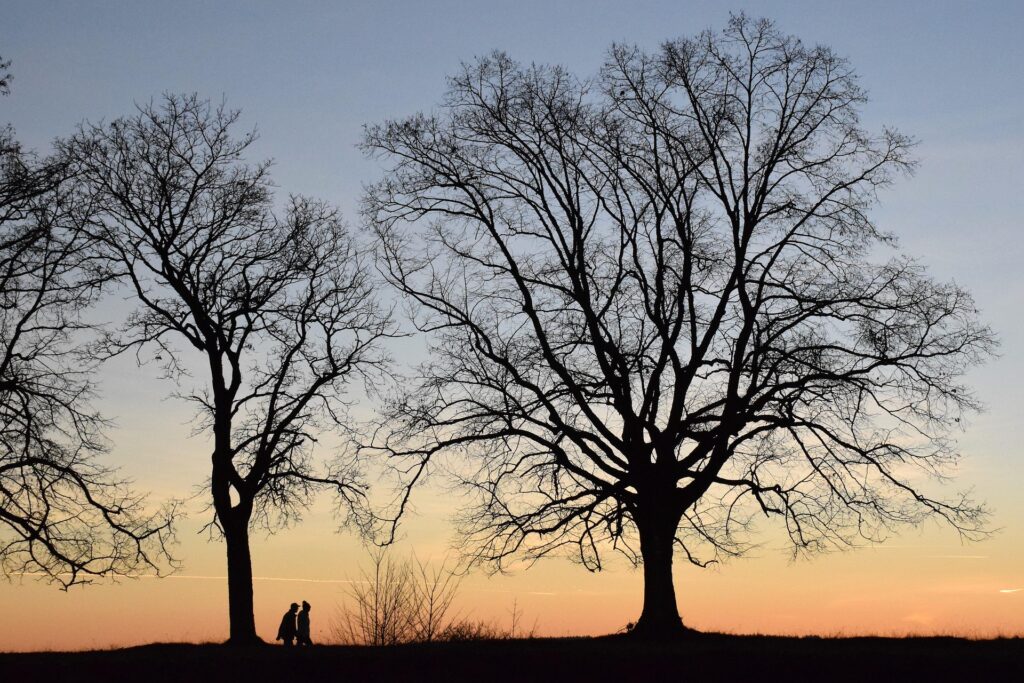
This year spring has come a little earlier. And while it is lovely to see the tiny flowers and the soft hues of pink and white appearing again, this year I can’t help but feel a little sad to say goodbye to winter. For the first time in as long as I can remember, this winter I have really noticed, and come to love, the magnificence of the trees left without leaves.
There is a staggering beauty to their branches. In their bareness you begin to notice their architecture, the quiet strength of their structure, and a sense of how trees move and lean without leaves. It feels as though nature, symbolised by these bare trees, gives us permission to be introspective. This season seems important in the piecing together of thought and life, which in the warmer months somehow feels less possible, when we are drawn outside by the sun and away from the quieter acts of winter reflection.
This kind of introspection feels important not only for the artist labouring in solitude, but for anyone. It is simply a time for reflection. It is also a time of not knowing, a pause in activity, which perhaps forms the foundation for the warmer months ahead. Soon the light of sunshine will draw us outside with plans for picnics and barbecues, when our days are no longer impeded by the cold and darkness of winter, and we open up to the world like flowers.
Without these moments of reflection, life can feel half-lived. There is always the long list of actions that fill our days: work, responsibilities, the care of others. The months roll by on a kind of autopilot, and we rarely pause to consider what we truly believe in, or what we really feel about the life we are living.
Lately, when I walk on my own, I have begun to refrain from listening to music or podcasts. Instead, I simply listen to the sounds around me. One sunny but still chilly morning I passed a mother with two young children, both dressed in bright rainbow colours, asking if they could sit on the damp, muddy grass. Their excitement at this small request struck me as deeply beautiful. It reminded me of what I often miss: the simple joy of being alive, and the ease with which children connect to the natural world around them.
This vitality of connecting to the earth is something adults rarely notice. Practical concerns, like clothes getting muddy, seem to stand in the way. Yet we often say that we want our children’s childhoods to include exactly this kind of grounded experience of the world.
Perhaps in quieter ways we carry that instinct with us into adulthood. We feel it in our relationship with trees, whether through the shade they offer in summer or the warmth they give us in winter.
Lighting a fire is not simply an act of comfort. It can also be an act of consideration. The purchase of timber reminds us to think about where it comes from, and about the sustainable management of woodland. The ancient practice of coppicing sustains us through the colder months while also allowing woodland ecosystems to regenerate and thrive.
These small recognitions bring a certain thoughtfulness to the simple act of lighting a stove. They allow us to consider the small acts we might take, even during quiet moments of winter introspection, to plant the seeds of a healthier planet. In a world where time often sweeps us along, these moments of attention to the smallest details hold immeasurable value.
And in this way the stove becomes more than a source of warmth. It becomes a quiet companion, carrying us from winter reflection into the brighter days ahead.