
Five minutes with Patricia Rodi
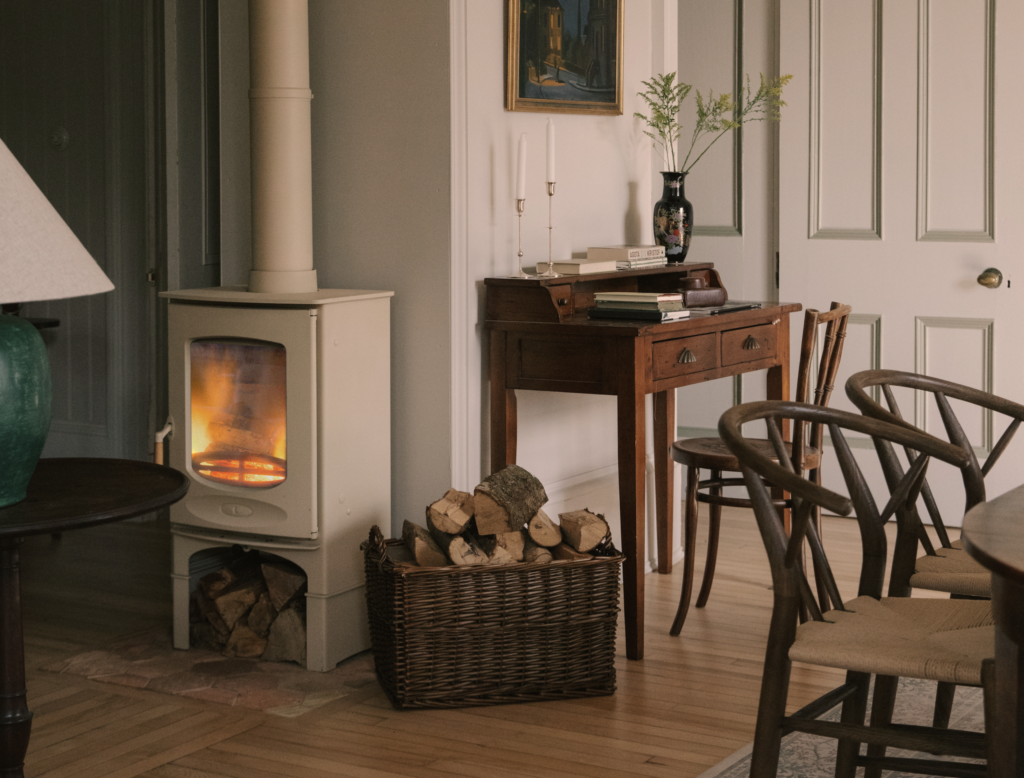
Patricia Rodi designs interiors that begin with feeling, the emotional temperature of a room, the rhythm of daily life, the quiet clarity of spaces that are lived in. Shaped by cultural influences from Sweden and France, and by women who made homes both resilient and stylish, her work is grounded rather than performative. Now based on the Scottish coast, she speaks to us about the books she returns to, the pull of landscape, and what firelight does to a room as daylight fades.
You’ve spoken about interiors as a way of telling a story. Are there any books you return to when you’re thinking about a project or product?
I often return to Rachel Cusk, particularly the way she writes about feeling rather than describing things directly. She has this ability to capture atmosphere, tension and intimacy without ever spelling them out, and I find that incredibly instructive when I’m thinking about interiors.
I’m less interested in how a room looks than in how it registers emotionally, what it holds, what it allows, what it reveals over time. Books like that remind me that spaces, like people, are defined as much by what’s unsaid as by what’s visible.
When I do reach for architecture or interiors books, it is usually vernacular buildings or domestic history, spaces shaped by necessity, climate and habit rather than trends. Those imperfect, evolved homes feel endlessly instructive.
When you begin a project, what helps you develop the interior?
I always begin with emotion. I ask how this space should feel to live in. Calm, grounded, generous, intimate. Once that feeling is clear, every decision becomes easier.
I am not interested in imposing a look. I want the interior to grow out of the building, the light, the landscape and the people who inhabit it. I think of design as an editing process, stripping things back until what remains feels honest, useful and deeply human.
Landscape feels present in your work. Is there a particular kind of place that inspires you most?
I am most inspired by places where architecture feels inseparable from its surroundings, where materials come directly from the land. Stone that mirrors the hills, colours borrowed from field, sea or sky.
Living close to the landscape teaches restraint. You stop trying to decorate for impact and start designing for harmony.
You live with woodburning stoves. How does firelight change your relationship with a room, particularly as daylight fades?
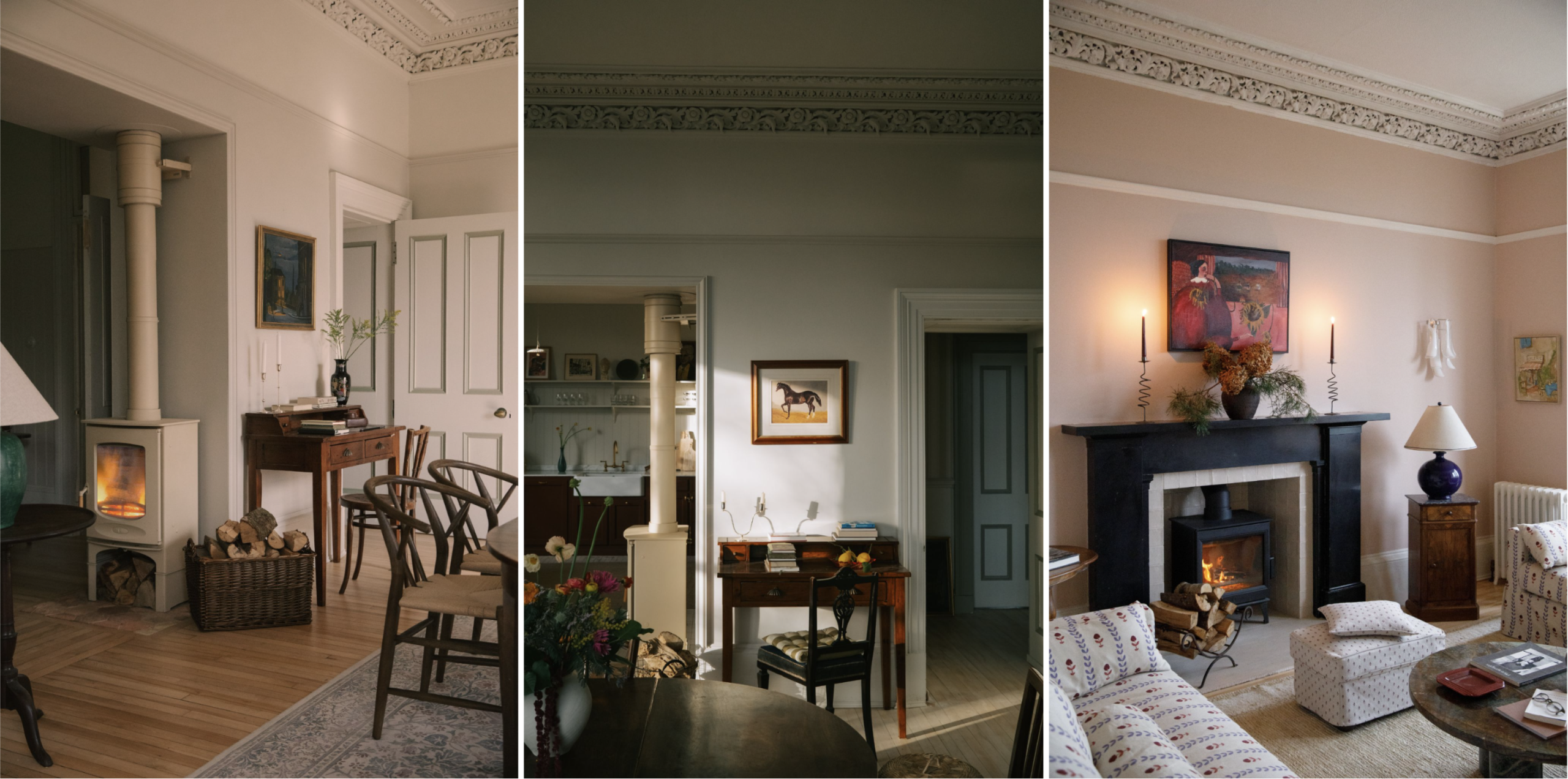
Fire is a constant in our house, not something reserved for evenings. We have Charnwood stoves throughout, and having a fire lit during the day gives the rooms a sense of structure and calm. It anchors the space, almost like a piece of architecture, rather than acting as decoration.
As daylight fades, firelight takes over quietly. It reduces contrast, softens edges and changes how scale is perceived. Rooms feel more contained, more focused. The emphasis shifts away from surfaces and towards presence, how the room is used, where people sit, how long they stay. Fire introduces rhythm and continuity, shaping the day rather than simply marking its end.
For someone who feels slightly overwhelmed by designing their home, where would you suggest they begin?
I always say begin by removing rather than adding. Clear what does not belong and see what the space is asking for.
Then focus on one room, usually the one you live in most, and make it genuinely work for your daily life. A good home is not created in one decisive moment. It evolves slowly through use, mistakes and small acts of care. The goal is not perfection. It is coherence.