Wood burners and children’s air quality: what the headline misses
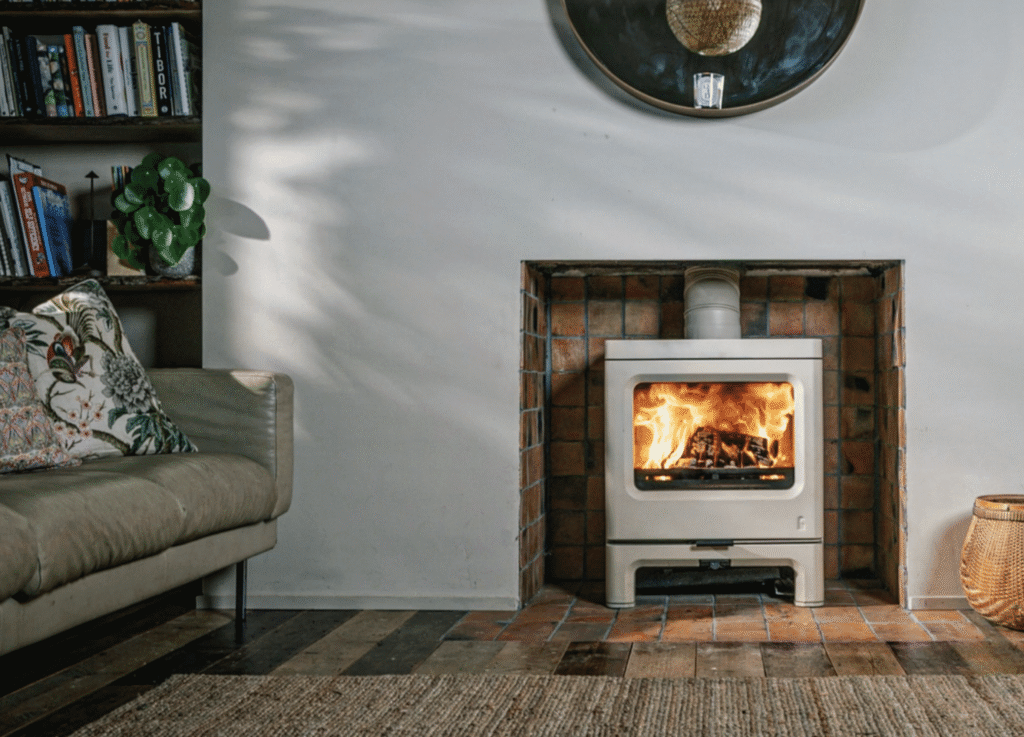
A recent monitoring study in Wales has made headlines after reporting higher PM2.5 exposure for children living in non-smoking homes where a “fuel burner or fireplace” was present, compared with non-woodburning, non-smoking homes. The research tracked 53 primary schoolchildren using backpack sensors and found the home environment was the biggest contributor to daily exposure.
That should be taken seriously as PM2.5 matters, particularly for children. However, it is not accurate to read this as “wood burners automatically mean higher indoor pollution”.
A 2022 review by Dr Amanda Lea-Langton of Manchester University found no scientific evidence of adverse health impacts from exposure to indoor air typically associated with modern enclosed wood burning stoves, while noting that other indoor sources, especially cooking, can release much higher levels of particulate matter.
The big issue is not modern wood burning stoves
When people say “wood burner”, they can mean very different things and all with very different implications.
•An open fire potentially with wet wood
•An older stove that is poorly installed or poorly used
•A modern, efficient ClearSkies stove burning dry wood
These “wood burners” are not comparable when it comes to emissions and efficiency. A modern stove is up to 90% more efficient than an open fire and can even reduce PM2.5 in the home.
This is why the phrase “wood burner” matters. It is a broad label that can hide the real causes, and the real solutions.
More on the study’s wording
Jason Scarlett, a modern stove expert and woodsman, gives an expert critique in a response shared on LinkedIn.
“Terminology is used to identify woodburning that is vague … ‘fireplace or fuel burner’ could include open fires or glass fronted appliances burning house coal … smokeless coal, peat, dry wood, wet wood and gas … Without that granularity, the data cannot tell us whether a small number of poorly performing homes are driving the average, nor whether well installed, well used systems perform very differently.”
That is not a technical quibble, it is the difference between a useful public health message and a blunt headline.
If you do not sufficiently separate appliance type, fuel type, ventilation, and whether a fire was actually alight during monitoring, it becomes far too easy to collapse everything into “wood burning”, even though the real world is more complex than that.
What the monitoring in the study does add
This work by no means settles the debate. It is a relatively small study and it reflects one place, one season, and a limited number of households.
Its value, however, is that it underlines two practical truths and can help guide a measured response to improve exposure.
1) The home is the main exposure setting
Children’s PM2.5 exposure was driven more by time at home than by school or travel.
2) Indoor sources stack up
Indoor air is a mix of what happens in the home and how well the home clears it.
Cooking is often the big PM2.5 source hiding in plain sight
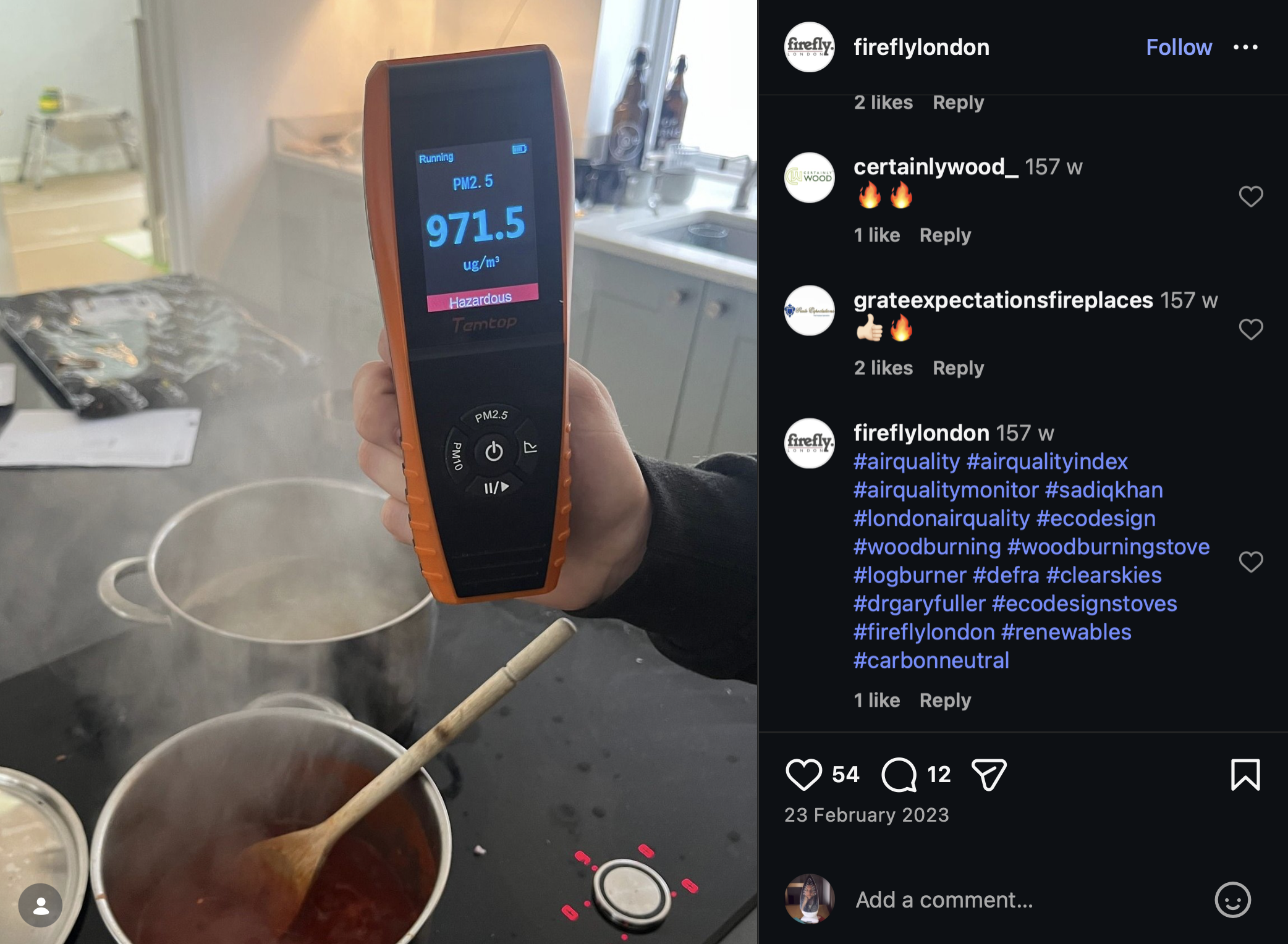
Many households don’t realise that cooking and even making toast can create far more PM2.5 than a wood-burning stove. As you can see from Firefly London’s excellent post, frying, grilling, and oven use can create very sharp spikes, even in homes with no stove at all. If ventilation is poor, those particles can spread beyond the kitchen and linger.
This is exactly why indoor air quality should not be treated as a single source story. It is a whole home story. Cooking, candles, cleaning sprays, damp, and poor ventilation can all add up in everyday life. That is why the approach to indoor air quality needs to be holistic, not focused on one headline source.
Modern stoves, used properly, are a different category
A key detail often missing from public debate is when and how particles actually enter the room. It is not simply “a stove in the house”. It is the moments when smoke escapes, typically during lighting, refuelling, or poor burning practice.
The London Wood Burning Project is especially relevant because it involved real homes, real behaviour, and indoor monitoring. It found that once a modern, high performing ClearSkies Level 5 stove was properly lit, refuelling did not increase indoor PM2.5, and in some instances indoor PM2.5 levels fell.
So, when burning is efficient and contained behind a closed door, indoor pollution need not rise in the way many people imagine. This is exactly why it is wrong to lump modern stoves in with open fires and older appliances. It produces the wrong conclusions, and it pushes attention away from where clean air gains are biggest.
What families can do right now about indoor air
Families need practical steps that reduce exposure from all sources.
Ventilation is the first line of defence
If air is not leaving the home, pollution inevitably builds up. Extraction and fresh air make a measurable difference, especially after cooking. So don’t forget to turn on your extractor when cooking and regularly open your windows and “house burp” as the Germans do!
Filtration can give extra control
A good air purifier can quickly cut indoor PM2.5, especially in bedrooms where people spend a big chunk of their time. It is not a replacement for ventilation, but is a back up that helps when opening windows is difficult.
Background levels can often sit low, then jump significantly during cooking. With extraction, a cracked window, and a purifier running, the numbers can drop back down again fast. The goal is not perfect air, but fewer big peaks, a lower daily average, and more control over the air children breathe at home.
A clearer conclusion
This latest study is a useful reminder that indoor PM2.5 can be higher in homes where solid fuel burning is present, if ventilation is poor and bad burning practices occur.
However, we need to communicate more clearly that not all “wood burners” are the same.
The most useful response is to focus on what reduces exposure in real homes most effectively.
•Target the smokiest options, especially open fires and older, higher emitting stoves
•Use dry, certified fuel and burn well. You can read more about best practices here
•Treat indoor air as a whole home issue, with cooking and ventilation taken seriously
If you would like some advice, your local Charnwood stockist can help you size and specify a stove, choose the right fuel and get set up to burn well. Taking action now can make next winter warmer, calmer and a little more in your hands.