
The Return by Dammy Ponnuthurai
While the earth remaineth, seedtime and harvest, and cold and heat, summer and winter, and day and night shall not cease.
Genesis 8:22
The August bank holiday weekend always feels like the beginning of the end of summer. Meteorological autumn begins on the first of September and, by the dawn of the month, it truly feels as though a new season has arrived. School begins, mornings are slightly darker and cooler and, even with the promise of a September heatwave, there is no holding back the feeling of change.
There is something to celebrate in that. We ritually welcome the new year as December ends, but I have always found something slightly melancholic about January arriving when all around us is dark. September offers something else. There is still light, but a crispness has entered the air. The wind swirling through the leaves feels almost like an announcement that something is about to change. The French have a word for this moment, la rentrée. It describes the return to school and work after the long summer holidays, but culturally it seems to mean something larger. Life begins again. I like that idea of September as a kind of return to ourselves, and perhaps it explains why it can feel more like the beginning of a new year than January, particularly as the cooler light of autumn makes familiar things appear slightly different again.
There is a contradiction in all of this that I love. The natural world is beginning to retreat at exactly the moment we are beginning again. Days shorten, leaves begin to turn and growth slows, while we return to school, work, projects and routines. One world is winding down while another seems to be starting up. And then there is the harvest. Squashes begin to appear, and with them come the first thoughts of soups and stews, while the salads of summer slowly fall away. Our food cravings seem to understand the change before we do. There is something especially comforting about the weekend ritual of leaving a soup or stew to bubble away gently, its scent slowly permeating the house and becoming part of the day.
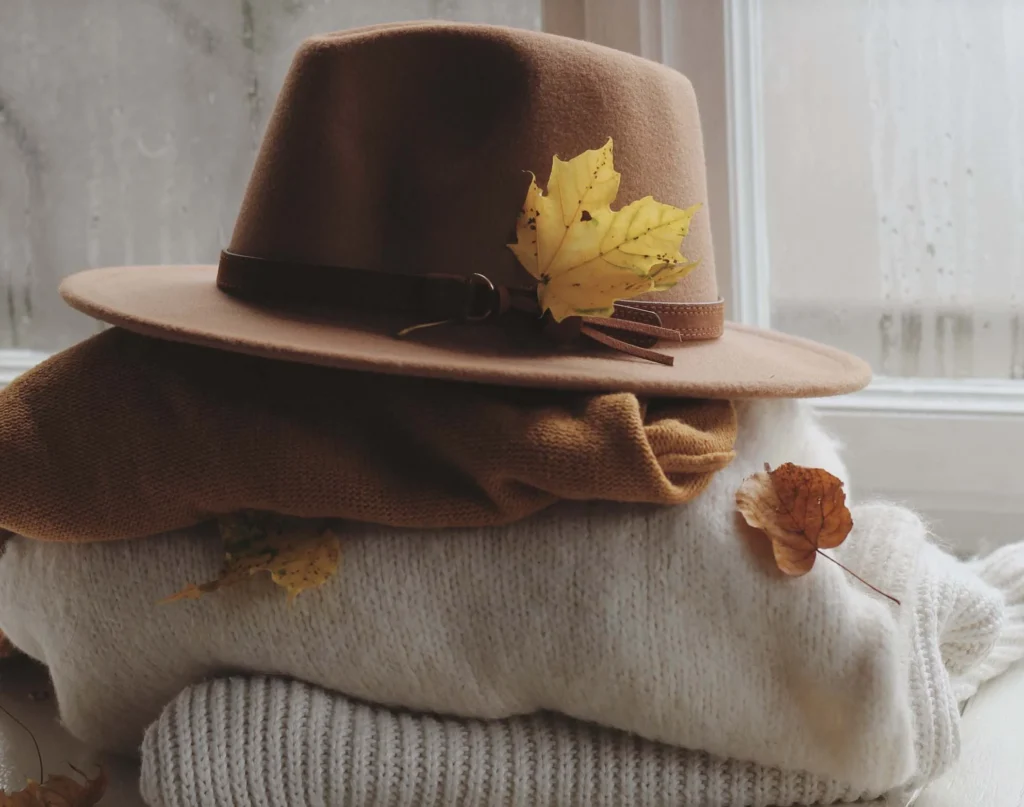
Anyone who knows me well appreciates the great comfort I find in layers. There is also something almost ceremonial about that first change of wardrobe at the end of August. The summer clothes begin to recede and we rediscover the things we had almost forgotten. The favourite cosy jumper, the coat, a constant winter companion, the scarf tucked away at the back of a drawer, hopefully still untouched by moths. It can feel almost like putting on a new cloak for the season ahead. Not becoming someone different exactly, but shifting slightly into another way of being. Autumn asks for a different rhythm, a different appetite, a different kind of warmth. And with that comes the return of one of my favourite rituals, lighting an early
morning fire. There is a stillness that comes with autumn, a more introverted pace to life, when opening a book or simply staying a little more still feels like receiving an invitation.
The summer light, which we all yearn for in the depths of winter, begins to fade. Like a departing loved one, we will miss it. But perhaps we need to miss things occasionally to properly appreciate their return. There has been such certainty and pleasure in the long days of summer, but autumn changes the pace. It quietly nudges us back towards rituals we had almost forgotten. Windows that have remained open for months are closed. Another layer is pulled on before leaving the house. Suppers change. And eventually there comes that first morning when lighting the stove feels not indulgent but necessary.
These rituals return year after year and perhaps that is precisely where their comfort lies. But ritual is different from doing something by rote. Ritual asks us to notice. Lighting a fire is a small example. A stove requires us to respond. To the weather outside, to the wood, to the strength of the flame. We add fuel, adjust the air, tend it, then leave it alone. However many times we do it, it is never quite the same fire.
I wonder if the seasons ask something similar of us. Summer allows a certain hedonism of movement, those long days spent outside with seemingly little need to pay attention to the hour. Autumn brings us back to structure, but not necessarily to sameness. We return to familiar things having changed a little ourselves. The book beside the fire, the jumper pulled from the back of a cupboard, hopefully with no new moth holes, the first darker evening spent at home. They are familiar and yet, after months without them, somehow new again.
Perhaps that is one of the quiet pleasures of autumn. Comfort does not require everything to remain unchanged. In fact, perhaps the opposite is true. The seasons move on and we move with them. And there is reassurance in knowing that nothing stays quite the same, but some things continue to come back to us. Familiar enough to comfort us, different enough to make us notice them again.