
London’s latest air quality data shows total PM2.5 is falling and wood burning’s contribution is decreasing
We have taken a look at the newest London Atmospheric Emissions Inventory (LAEI) and can report that overall particulate pollution in the capital is still falling, which is great news. In fact, between 2019 and 2022, total PM2.5 emissions dropped by 6% across Greater London, and are forecast to fall by a further 4% by 2025 and 11% by 2030 from 2022 levels.
The big takeaway is that London’s PM2.5 problem is reducing overall, and on top of that wood burning’s contribution has also gone down.
1) Wood burning’s PM2.5 contribution continues to decrease
The LAEI shows London’s total PM2.5 fell by 6% between 2019 to 2022. Within that smaller total, the wood-burning share also fell, from 16.7% to 15.4%, as reported by Impact on Urban Health. In other words, wood burning is now a smaller slice of a smaller pie, reflecting both a lower total and a lower share, which means PM2.5 from wood burning fell by more than the percentage drop alone suggests.
2) Not all woodburning is the same
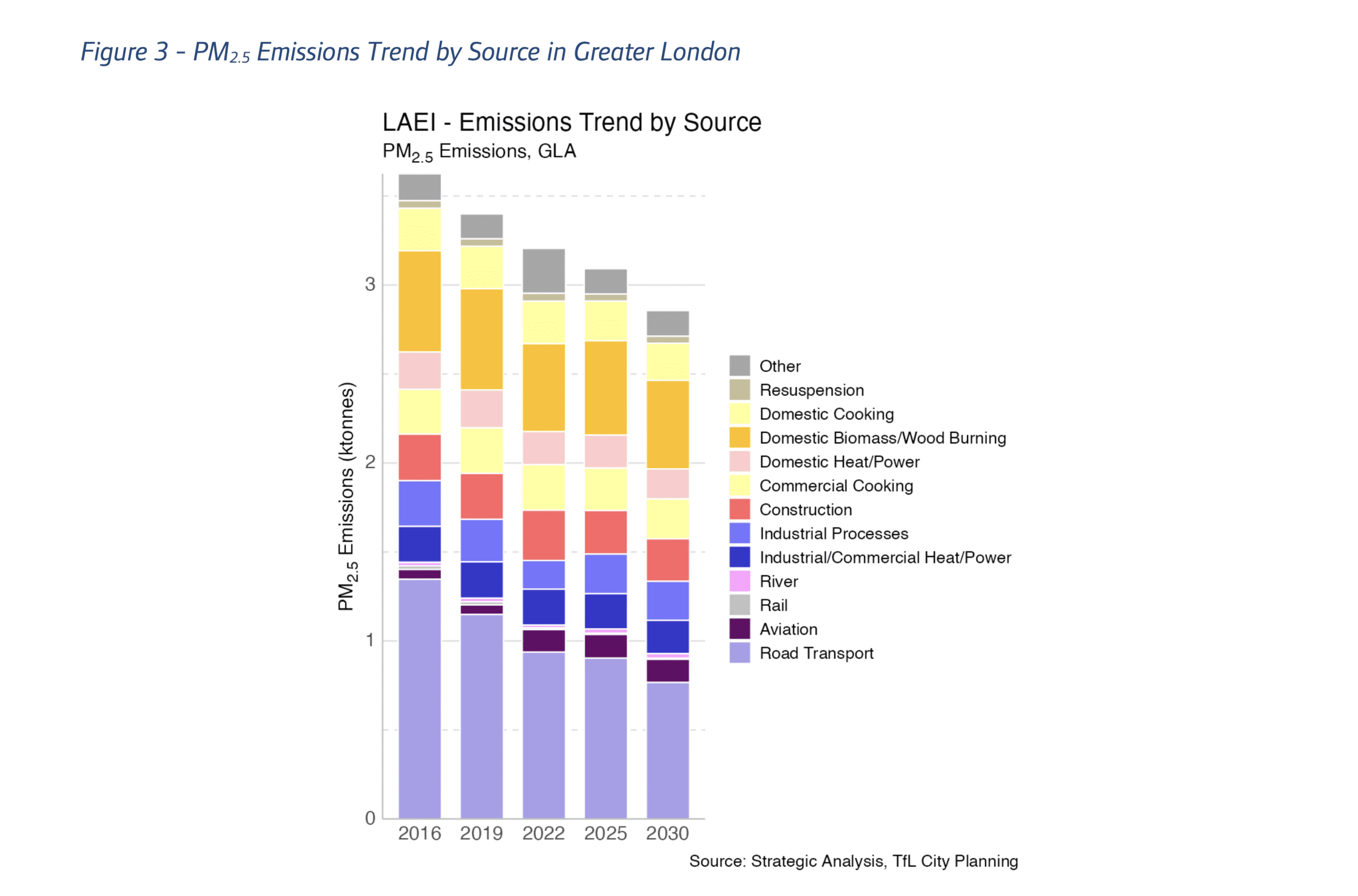
As the LAEI has shown with cooking, splitting categories improves understanding. “Commercial cooking” emissions were split into commercial vs domestic cooking to better reflect where and how those emissions occur. We welcome this development, but we encourage the analysts to also provide more granularity for the stove sector because too often modern, clean-burning stoves are lumped together with open fires and old appliances in data sets.
In this latest report, the term “domestic biomass/wood burning” groups open fires and older appliances together with modern stoves, even though they perform very differently. SIA analysis of NAEI data indicates that Ecodesign closed stoves burning dry wood contribute around 0.3% of total UK PM2.5, which is a tiny fraction compared with open fires. This lack of granularity risks distorting perceptions of modern stoves and leads to the wrong conclusions being drawn.
Independent testing for the Stove Industry Association (SIA) shows Ecodesign-compliant stoves can reduce particulate emissions by up to 90% compared with an open fire and around 80% compared with older stoves. The data really needs to do more to reflect that distinction, so that better policy decisions and real progress towards greater energy security, sustainability and clean air can be made.
3) Record stove sales coincided with decrease in PM2.5 from wood burning
Between 2019 and 2022, total PM2.5 emissions dropped by 6% across Greater London, and they are forecast to fall further. What is very important to note is this significant drop has coincided with record stove sales during that time. This strongly suggests that consumers are making a significant improvement to air quality by installing Ecodesign and clearSkies Stoves compared to older appliances.
Keep replacing open fires and old appliances with modern stoves
Historically, around 70% of wood-burning appliances in London were open fires which produce up to 90% more emissions, while being far less efficient. Upgrading to modern, Ecodesign-compliant (and ideally clearSkies-rated) models remains one of the fastest ways to cut real-world emissions without sacrificing energy resilience.
Balance, not bans
London’s overall PM2.5 levels are falling even though construction’s share rose from 7.6% to 8.8% between 2019 and 2022. Road transport remains the largest contributor on 29%, while wood burning’s share has further reduced since 2019.
The sensible path forward is one of balance. We must keep replacing open fires and legacy appliances with modern Ecodesign and clearSkies stoves, while encouraging good burning practices. Continued action on transport and construction emissions also needs to be considered. This improves air quality while making the most of the different technologies and energy sources available today.
Read why just ban it is the wrong answer to complex problems
________________
At Charnwood we are committed to innovation to reduce emissions further and help customers use their stoves optimally. Most notably, after 10 years of research and development we have released the much anticipated Intelligent range of stoves which allow test lab results to be achieved in the home, while saving users up to 50% on their wood fuel bill due to the added efficiency.
Modern wood burning technology should be recognised as an important part of the strategy to improve the air quality of London even further while offering energy security and a host of other unique and significant benefits.
For a closer look at the data in this article click here