
Bridges by Dammy Ponnuthurai
“Be still, and know that I am God.” — Psalm 46:10
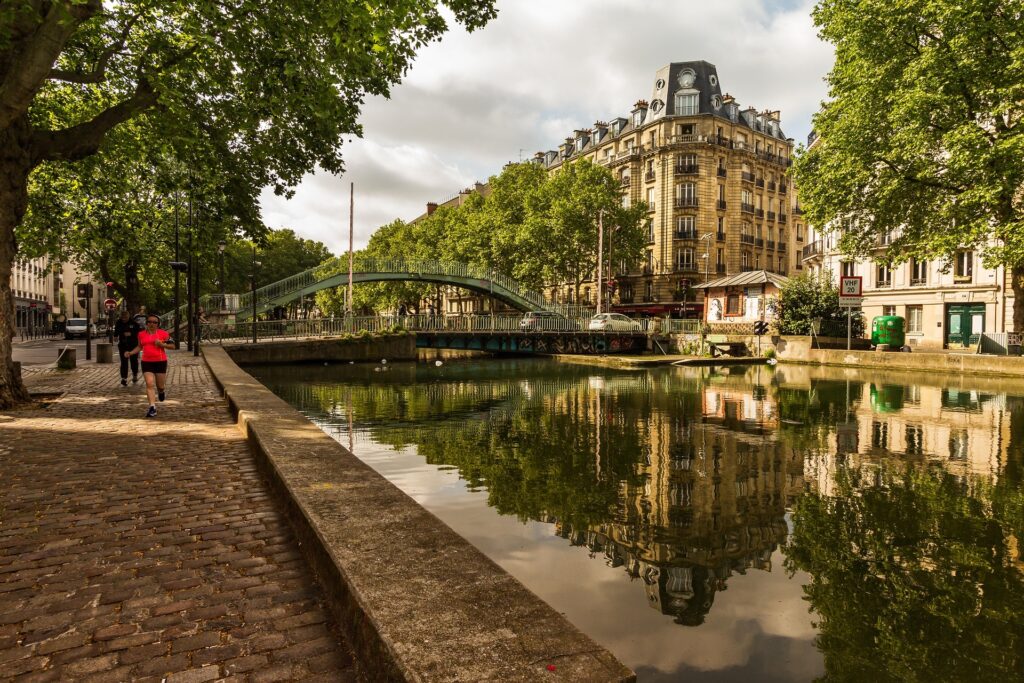
The French phrase for the public holidays of May is faire le pont, or to make the bridge. It describes the habit of taking an extra day off to join a public holiday to the weekend, but it also suggests something gentler: the idea that rest is not an interruption to life, but a crossing into another way of inhabiting it. The French seem to treat rest with a seriousness we often reserve for work. A very old friend of mine gently mocks my love of French cinema, which he says consists mostly of pauses, cigarettes and people looking out of windows. But perhaps that is exactly why I love it. French films understand the importance of what happens between events: the glance, the silence, the weather in a room.
In a culture increasingly shaped by speed and distraction, this can feel quietly radical. To stop long enough to notice the light changing across a wall. To sit without reaching for something. To allow a thought to arrive fully before replacing it with another.
In The Private Life of Plants, David Attenborough observed, that if you condense three months into twenty seconds, “the desolation of Winter quickly warms into the riot of Spring.” Time often moves like that. Entire seasons disappear before we have properly inhabited them.
The May holidays always seem to mark this threshold. Winter begins to leave not dramatically, but theatrically, as though exiting a stage. Then June arrives and the body begins to trust warmth again. Winter coats are folded away. Windows remain open later into the evening. Picnics, long lunches and plans made almost absent-mindedly begin to fill the weeks ahead.
Even the fire changes character. In winter, it offers enclosure: warmth gathered against darkness. But in the early summer months, a stove lit late in the evening feels different. It is less protective than companionable. The warmth no longer stands against the cold so much as extends the day gently into night.
There is something faintly childlike about sitting beside a fire in summer. It recalls the feeling of being with an older relative whose calm presence alone could alter the atmosphere of a room. As children, we often resist slowness. Later, we begin to understand that it may be one of the conditions necessary for attention, for thought, even for joy.
Increasingly, it feels as though our minds are being trained away from wandering, from lingering, from the slow associative drift by which one thought quietly leads to another. Efficiency has become so dominant that curiosity itself can begin to feel indulgent unless it proves its usefulness.
Even rest now risks becoming instrumentalised. We speak of “recharging” as though human beings were devices. But the deepest forms of rest are often the least measurable: an afternoon dissolved in conversation, the sound of rain against a window, the absent-minded tending of a fire.
Perhaps this is why certain rituals endure. A fire gathers the senses. It slows the room. It reminds us that not everything valuable announces itself immediately. Sometimes the door only needs to open slightly, and imagination will do the rest.